In a previous blog, we discussed the importance of starting every program with a static posture assessment to identify structural imbalances before a client ever picks up a weight. But once you’ve identified that a client has overpronated feet or a rounded upper back, what comes next?
To fix the “frame” of the house, you have to understand the “cables” holding it together. This is where the transition from traditional anatomy to functional anatomy becomes the bridge to effective corrective exercise programming.
The Anatomy of a Cadaver vs. The Anatomy of Life
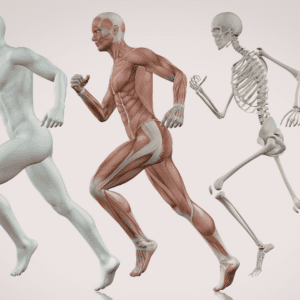 Most of us learned anatomy through the “Origin, Insertion, and Action” (OIA) method. We were taught that “Muscle A” connects “Bone 1” to “Bone 2,” and when it contracts, it pulls them together. For example, a textbook tells you that the quadriceps straighten the knee. This is why trainers often use leg extensions to “strengthen the quads.”
However, in real life, the body doesn’t function this way. When you walk, run, or squat, the primary job of your quadriceps isn’t just to straighten the knee—it’s to slow down the bending of the knee so you don’t collapse under the force of gravity. In the gym, we are used to focusing on the shortening of muscles. In real life, the lengthening of muscles is what saves our bodies from pain and injury.
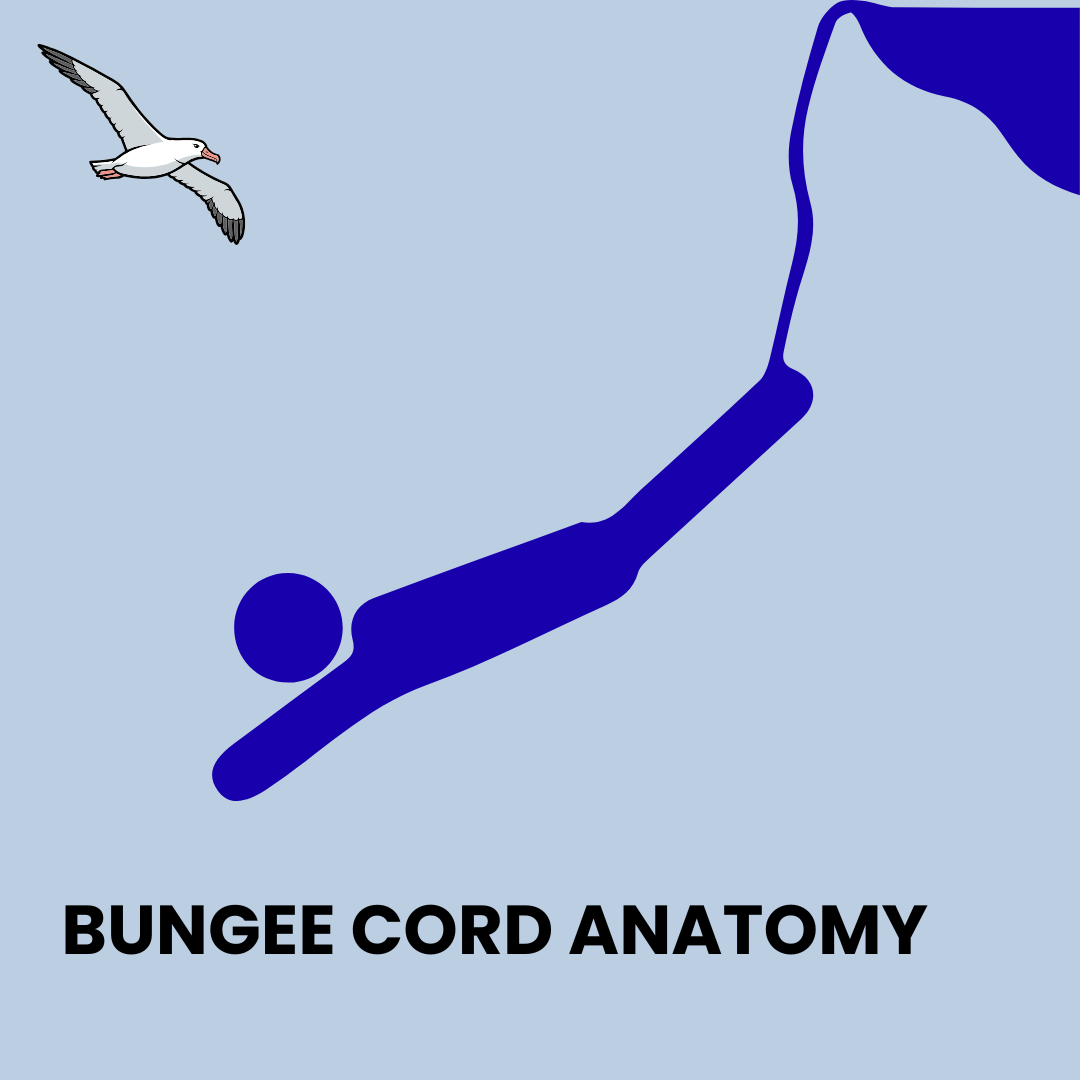
The Bungee Cord Principle
Think of your muscles and tendons less like rigid levers and more like bungee cords.
When you lean forward to pick up a pencil, your back muscles don’t just “shut off.” They lengthen under tension to slow your torso down. If they didn’t, you’d fall flat on your face. This lengthening action (eccentric loading) does two vital things:
- Protects the Joints: It absorbs the shock of gravity and ground reaction forces.
- Stores Energy: Like a stretched bungee cord, a lengthened muscle stores potential energy that it uses to snap back and create a powerful, efficient contraction and movement.
The Chain Reaction: Fascia and Connectivity
This process doesn’t just happen in isolation. The reason a foot problem often becomes a back problem is that our muscles are all connected by fascia. Fascia is a web of connective tissue that binds every muscle and organ into an integrated system.
We move in systems or “lines”. For instance, the Superficial Back Line of fascia includes muscles and other soft tissues that run from the soles of your feet, up the calves, hamstrings, and back, all the way to your forehead. So, if your calves are chronically tight, that tension travels up the entire chain, potentially causing your lower back to overwork or your neck to strain. When you understand these lines—front, back, lateral, and spiral—you stop chasing the symptom of pain and start addressing the cause.
Functional Anatomy in Practice
To move from theory to results, consider how specific muscles act as bungee cords in everyday movement:
- The Gluteus Maximus: Traditionally known for hip extension, its “real-life” job is to slow down the hips as they bend and internal rotation of the leg as your foot hits the ground. If the glutes can’t lengthen to control this rotation, the hip gives way, and the knee collapses inward, leading to injury.
- The Abdominals: While we’re taught they flex the spine (crunches), their functional role is to act as a brake, slowing down the extension of the spine when we reach overhead so we don’t over-arch and pinch our lower backs.
- The Hip Flexors: Rather than just lifting the leg, they must lengthen to allow the leg to travel behind us during a stride. In our sedentary world, these “bungees” are often stuck in a shortened state, tugging on the spine and limiting movement.
Stop Guessing, Start Integrating
If you want to move beyond the “fingers crossed” model of fitness, you must first master the art of the assessment. By identifying which skeletal structures are out of alignment (Step 1 in The BioMechanics Method) you can then use this information to determine which “bungee cord” systems are not working correctly (Step 2 in The BioMechanics Method) and then retrain these systems accordingly.
The goal isn’t just to make a muscle “burn”; it’s to retrain the musculoskeletal system to function correctly. When you teach a body to move smoothly as a coordinated, integrated unit, you don’t just build a better-looking client—you build a more resilient human.
Ready to elevate your career?
Learn the step-by-step process for identifying exactly which muscles and soft tissues are driving structural imbalances—and how to fix them in the Understanding Muscles and Movement course (Module 2 of The BioMechanics Method Corrective Exercise Specialist certification available through NETA).
Contributed By:
 Justin Price is one of the world’s foremost experts in musculoskeletal assessment and corrective exercise and creator of The BioMechanics Method Corrective Exercise Specialist certification (TBMM-CES) available through NETA. The BioMechanics Method is the fitness industry’s highest-rated CES credential with trained professionals in over 80 countries. Justin is also the author of several books including The BioMechanics Method for Corrective Exercise academic textbook, a former IDEA Personal Trainer of the Year, and a subject matter expert for The American Council on Exercise, Human Kinetics, TRX, BOSU, Arthritis Today, BBC, Discovery Health, Los Angeles Times, Men’s Health, MSNBC, New York Times, Newsweek, Time, Wall Street Journal, WebMD and Tennis Magazine.